Policyholder-Side Property Claim Representation Throughout Illinois
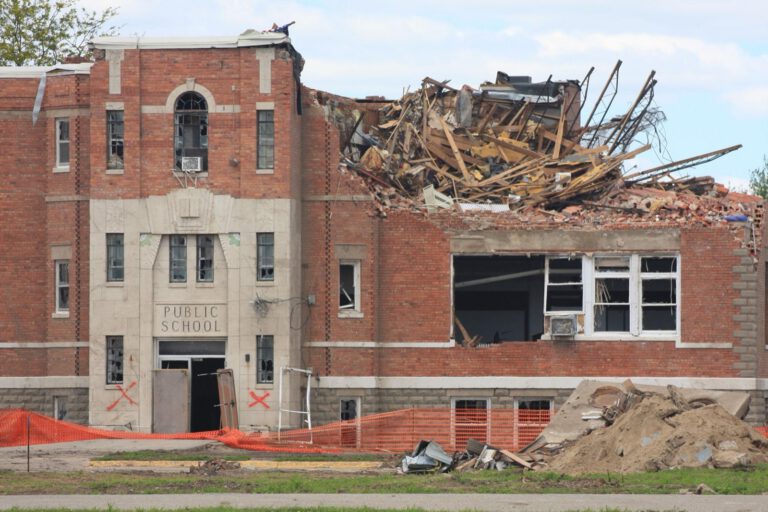
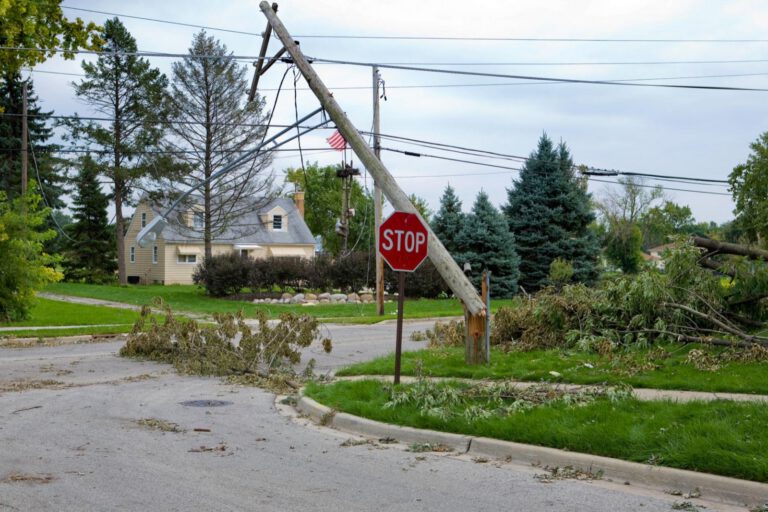
When hail, tornadoes, straight-line wind, fire, smoke, winter weather, frozen pipes, water intrusion, equipment breakdown, structural damage, or another covered event damages an Illinois property, repairing the building is only one part of the recovery.
The claim must also be investigated, documented, estimated, presented, negotiated, and managed correctly. A substantial loss may involve multiple buildings, equipment, contents, tenants, business interruption, temporary repairs, and disputed scope.
Mission Property Loss Consultants provides professional public adjusting services for Illinois policyholders facing complex, high-value, delayed, disputed, denied, or underpaid property insurance claims.
We represent the policyholder, not the insurance company.
Mission PLC assists commercial and industrial owners, manufacturers, warehouse and logistics operators, multifamily groups, associations, municipalities, schools, churches, healthcare and hospitality operators, agricultural businesses, family offices, and high-value homeowners.
Our Illinois service area includes Chicago, Cook County, the North Shore, the collar counties, Rockford, Peoria, Bloomington-Normal, Champaign-Urbana, Springfield, the Quad Cities, Metro East, and Southern Illinois.
Mission PLC has published Illinois-specific guidance addressing severe storms in Wheaton and hail losses across Metro East.
Mission-Driven Property Claims Advocacy
We investigate. We document. We negotiate. You recover.
Call 833-446-7728, request a confidential property claim review, or schedule a consultation.
Illinois Property Insurance Perils We Handle
Illinois properties face severe convective storms, winter weather, fire, water, electrical, structural, and operational risks. Mission Property Loss Consultants assists qualifying policyholders with claims involving:
- Hail, tornadoes, derechos, straight-line wind, downbursts, microbursts, and severe thunderstorms
- Lightning, electrical surges, utility interruption, and equipment breakdown
- Structural fire, smoke, soot, ash, heat, odor, and explosion damage
- Snow, ice, freezing rain, extreme cold, frozen pipes, and burst plumbing or sprinkler lines
- Roof leaks, storm-created openings, water intrusion, sewer or drain backup when applicable coverage exists, and resulting mold-related damage when covered
- Commercial roof, exterior wall, glazing, masonry, and building-envelope damage
- Structural movement, partial collapse, falling trees, falling objects, vehicle impact, and debris impact
- Theft, vandalism, builders-risk, and construction losses
- Earthquake or seismic damage when the policy provides applicable coverage
- Business interruption, rental-value loss, and extra expense resulting from covered physical damage
Coverage depends on the policy, cause of loss, facts, exclusions, limits, deductibles, endorsements, and evidence. Mission PLC investigates and presents the policyholder’s supported position; we do not guarantee coverage or a particular result.
Need Insurance Claim Help Near You in Illinois?
Mission Property Loss Consultants provides policyholder-side property insurance claim help throughout Illinois.
Property owners, contractors, attorneys, property managers, executives, and institutional leaders often find Mission PLC while searching for:
- Claim help near me
- Insurance claim help near me
- Public adjuster near me
- Insurance adjuster near me
- Commercial insurance claim help
- Property damage claim help
- Insurance estimate review
- Insurance claim supplement help
- Contractor insurance claim support
- Property damage documentation
- Public adjuster for attorneys
These searches can produce several types of professionals. An insurance company adjuster works for or on behalf of the insurer. A contractor determines how damaged property should be repaired and what the construction work will cost. An engineer evaluates technical questions within the engineer’s assignment. An attorney provides legal advice and legal representation.
A licensed public adjuster retained by the policyholder assists with investigating, documenting, preparing, presenting, and negotiating the property insurance claim. Learn more about what a public adjuster does.
Mission PLC represents the policyholder, not the insurance company.
Our services may include:
- Reviewing the policy, estimates, reports, payments, invoices, and correspondence
- Inspecting affected buildings, roofs, systems, equipment, interiors, and contents
- Preparing property damage documentation and repair scopes
- Comparing contractor and carrier estimates
- Identifying omitted or disputed items
- Preparing supplemental claim information
- Organizing business-income and extra-expense records
- Participating in inspections and coordinating qualified professionals
- Negotiating disputed portions of the amount of loss
- Tracking payments, depreciation, submissions, and unresolved issues
Learn more about the difference between a public adjuster and an insurance company adjuster.
Illinois Public Adjuster Near Me
Mission PLC provides property claim assistance throughout Illinois, including Chicago, the collar counties, Rockford, Peoria, Springfield, the Quad Cities, Metro East, and Southern Illinois.
Service availability depends on the property location, property type, claim circumstances, policy, timing, licensing requirements, and scope of the assignment.
A search for a public adjuster near me does not necessarily show which professional represents the policyholder. Before retaining an adjuster, confirm the professional’s role, licensing, experience, services, written contract, and compensation.
Call 833-446-7728 or request a confidential Illinois property claim review. Include the property location, property type, date and cause of loss, carrier, current claim status, estimate or payment amount, and the primary unresolved issue.
Help After the Insurance Company Has Inspected
Mission PLC can become involved before the first carrier inspection, during the investigation, after an estimate or partial payment, following a partial denial, when contractor and carrier scopes substantially differ, or when a claim becomes delayed or disputed.
An initial inspection or payment does not necessarily mean every affected building component, repair requirement, item of property, or category of financial loss has been fully documented.
What Is an Illinois Public Adjuster?
A public adjuster is an insurance claim professional retained by the policyholder. The public adjuster assists with the preparation, presentation, and settlement of the policyholder’s claim rather than representing the insurance company.
The Illinois Department of Insurance distinguishes public adjusters retained by insureds from company and independent adjusters working for insurers. Illinois requires public adjusters to be licensed and to use an approved written contract.
Mission PLC does not replace the policyholder’s attorney, broker, contractor, engineer, architect, accountant, restoration company, environmental consultant, property manager, or internal risk team. We work alongside those professionals while remaining focused on the insurance claim.
Large claims rarely follow a simple sequence. Disputes may involve causation, damage extent, repair feasibility, matching, concealed conditions, code, access, depreciation, business income, and extra expense.
An insurer’s estimate may reflect what one representative observed during one visit. It may not include concealed conditions discovered during demolition, occupied-building constraints, manufacturer requirements, testing, commissioning, temporary facilities, specialty trades, tenant coordination, project phasing, or the complete operational effect of the loss.
Mission PLC helps organize the physical, financial, and documentary portions of the claim into one coordinated presentation.
Hail, Wind, Tornado, and Severe-Storm Claims
Illinois hailstorms can damage commercial, industrial, institutional, agricultural, multifamily, hospitality, and high-value residential properties.
Affected components may include TPO, EPDM, PVC, modified-bitumen, built-up, coated, metal, slate, tile, and shingle roofs; insulation, flashing, coping, gutters, and perimeter metal; HVAC equipment, condenser coils, exhaust fans, skylights, windows, siding, wall panels, exterior lighting, signs, solar panels, vehicles, and agricultural structures.
Different materials respond differently to hail impact. Damage to membranes, coatings, seams, insulation, mechanical components, or solar equipment may require closer technical review. The absence of an active leak on the inspection date does not automatically establish that the roof or building envelope was not damaged.
Tornadoes, derechos, downbursts, microbursts, and straight-line wind may affect roof attachments, seams, insulation, exterior walls, glazing, overhead doors, loading docks, signs, fences, rooftop equipment, and detached structures.
A roof can remain generally in place while perimeter sections, fasteners, insulation boards, or concealed attachments have been compromised. Wind-driven debris may damage glazing, masonry, mechanical systems, vehicles, signage, and equipment. A severe-wind claim may also involve structural movement, water intrusion, utility failure, emergency stabilization, demolition, debris removal, code-related reconstruction, and business interruption.
Mission PLC evaluates the property as an integrated system rather than limiting the claim to the most obvious opening or missing component.
Review Mission PLC’s hailstorm claim services, wind damage claims, storm damage claims, and tornado damage claims.

Fire, Smoke, Soot, Explosion, and Odor Claims
Fire losses often extend beyond visibly burned materials. Heat, smoke, soot, ash, suppression water, chemicals, corrosion, and odor may affect structural components, roofing, electrical systems, HVAC distribution, plumbing, fire-protection systems, elevators, electronics, machinery, inventory, documents, food products, textiles, porous materials, adjacent units, and common areas.
A fire claim may also involve emergency security, temporary utilities, testing, inventory replacement, displacement, lost income, production interruption, and extra expense. Questions may arise over what can be cleaned, what must be replaced, whether soot entered mechanical systems, whether heat affected electrical or structural components, and whether contents remain usable.
Mission PLC documents the complete effect of the loss while coordinating with qualified restoration professionals, contractors, engineers, industrial hygienists, accountants, and counsel when appropriate.
Review Mission PLC’s fire insurance claim services, fire and smoke damage services, and smoke damage claim assistance.
Winter Weather, Frozen Pipes, and Water Intrusion
Illinois winter weather can produce heavy snow, ice, freezing rain, extreme cold, lake-effect snow, rapid temperature changes, and utility interruption.
Resulting losses may include roof loading, structural deflection, collapse, ice dams, frozen pipes, burst plumbing or sprinkler lines, boiler failures, heating interruption, refrigeration loss, fallen trees, spoiled inventory, tenant displacement, and business interruption.
Water can travel behind walls, beneath flooring, through insulation, into elevators, and into electrical or mechanical spaces before becoming visible. In high-rises, multifamily properties, schools, hotels, offices, warehouses, and industrial facilities, one failed system can affect multiple floors or operating areas.
The claim may involve extraction, drying, demolition, testing, temporary protection, electrical and mechanical work, contents handling, relocation, lost rent, and reconstruction.
Mission PLC helps preserve and organize photographs, moisture records, drying logs, demolition documentation, mitigation invoices, repair proposals, and other evidence.
Related resources include frozen-pipe claims, burst-pipe claims, water-leak claims, and roof-leak claims.
Commercial Roof, High-Rise, Masonry, and Historic-Property Claims
Illinois roofs and exterior systems face hail, wind, snow, ice, freezing temperatures, summer heat, ultraviolet exposure, and repeated freeze-thaw cycles.
Mission PLC assists with claims involving low-slope membrane and coated roofs, metal roofs, slate, tile, shingles, insulation, vapor barriers, decking, flashing, coping, parapets, drains, scuppers, brick, limestone, terra cotta, stone, stucco, windows, curtain walls, storefront systems, sealants, waterproofing, rooftop equipment, and solar mounting systems.
Roof disagreements are often reduced to whether one visible location can be patched. A complete analysis considers whether the proposed repair is technically appropriate, reasonably available, compatible with the existing assembly, consistent with manufacturer requirements, protective of relevant warranties, and practical under actual site conditions.
Chicago high-rise, condominium, hotel, office, healthcare, and institutional properties may require swing stages, scaffolding, cranes, sidewalk protection, elevator coordination, mechanical-riser work, phased construction, after-hours access, temporary life-safety measures, and extended supervision. A unit-level estimate may not capture the actual logistics necessary to complete the work.
Historic and architecturally significant properties may contain brick, limestone, terra cotta, stone, decorative metal, plaster, slate, tile, historic woodwork, and custom windows. Localized damage may create broader requirements for matching units, mortar composition, tuckpointing, stone fabrication, concealed anchors, specialty labor, scaffolding, and finish blending.
Mission PLC coordinates with qualified contractors, architects, engineers, preservation professionals, and other specialists when the property requires specialized expertise.
Equipment, Structural, Electrical, Theft, and Construction Claims
Lightning, electrical failure, mechanical breakdown, and utility interruption may affect electrical distribution, building controls, elevators, refrigeration, HVAC, data infrastructure, medical and laboratory equipment, production machinery, food-processing equipment, and renewable-energy systems.
The physical repair may represent only part of the loss. A covered event may also cause spoilage, production delay, data recovery, equipment rental, testing, calibration, recommissioning, overtime, expedited shipping, and business-income loss.
Structural damage from wind, snow load, impact, fire, water, falling objects, construction, or equipment movement may require engineering, stabilization, restricted access, demolition, reconstruction, relocation, and interruption analysis.
Mission PLC also assists with building-collapse claims, earthquake claims, theft and vandalism claims, and builders-risk claims.
Public Adjusting Services: How Mission PLC Helps
Claim-File Review and Documentation
We review policies, endorsements, estimates, reports, correspondence, photographs, invoices, payments, depreciation calculations, and prior submissions. We document affected roofs, elevations, interiors, equipment, contents, buildings, units, and operating areas.
Scope and Insurance Estimate Review
An insurance estimate review is more than a comparison between two totals. Differences may involve missing trades, measurements, quantities, repair methods, access, demolition, protection, supervision, permits, code requirements, testing, commissioning, material availability, and project conditions.
A lower estimate is not necessarily accurate, and a higher estimate is not automatically correct. The question is whether the scope, quantities, pricing, and repair methods are supportable for the actual property.
Insurance Claim Supplement Help
The initial estimate or payment is not always the final amount involved in the loss. Concealed damage may be discovered, equipment may fail testing, contractor pricing may be finalized, building requirements may become clearer, or a proposed repair may prove impractical.
Mission PLC organizes supplemental estimates, contractor proposals, change orders, photographs, measurements, invoices, manufacturer information, technical reports, testing results, and incurred expenses.
Business Income and Extra Expense
Physical damage can interrupt production, occupancy, rental income, reservations, customer orders, research, and supply chains. Business-income documentation may involve financial statements, tax returns, budgets, production records, occupancy reports, rental ledgers, payroll, inventory, contracts, seasonality, continuing expenses, saved expenses, and the reasonable period of restoration.
Mission PLC works with the policyholder and its accounting professionals to organize a clear presentation of the financial loss. Learn more about business-interruption claims.
Claim Communication and Negotiation
We communicate with carrier representatives, participate in inspections, respond to requests, present supported documentation, address disputed scope and valuation issues, and track unresolved items. Our objective is a full and fair settlement based on the facts, damage, evidence, and policy, not an inflated or unsupported claim.
Contractor and Attorney Claim Support
Contractors frequently identify repair requirements that are absent from an insurer’s estimate. Construction and public adjusting are different professional functions.
The contractor determines how the property should be repaired and what the work will cost. Mission PLC assists the policyholder with investigating, documenting, presenting, and negotiating the insurance claim.
Our contractor-facing work may include comparing estimates, reviewing omitted construction items, evaluating quantities, documenting site access and safety requirements, organizing specifications and invoices, participating in inspections, and explaining disputed scope or pricing.
Mission PLC also works with attorneys and their clients when a property matter requires inspection, scope development, estimate analysis, claim-file organization, business-income support, appraisal preparation, or comparison of carrier and policyholder positions.
Mission PLC does not provide legal advice or replace counsel. Policy interpretation, statutory rights, litigation strategy, legal deadlines, and legal conclusions remain within the attorney’s role.
Contractors and attorneys may contact Mission PLC or direct a policyholder to the confidential claim-review form.
Property Types We Serve
Commercial, Industrial, Warehouse, and Logistics
Mission PLC assists office buildings, retail centers, mixed-use properties, warehouses, intermodal facilities, cold storage, food-processing plants, manufacturers, data centers, laboratories, medical properties, and distribution centers.
Industrial claims may involve machinery, utilities, inventory, testing, calibration, temporary production, expedited freight, long-lead equipment, and extended interruption. Our strategy considers both the building and the operation it supports.
Review Mission PLC’s industrial property services and warehouse claim services.
Multifamily, Condominium, and Portfolio Properties
A multifamily or association loss may affect multiple buildings, roofs, elevations, units, common areas, mechanical systems, parking structures, tenants, and rental income.
Mission PLC uses a repeatable documentation process intended to identify which buildings were inspected, which areas were affected, what photographs correspond to each location, what scope applies throughout the property, and what conditions are unique to one building or unit.
Schools, Municipalities, Churches, Healthcare, and Hospitality
Institutional claims may require coordination among administrators, boards, facilities personnel, brokers, contractors, engineers, architects, attorneys, accountants, and carrier representatives.
Mission PLC organizes information to support leadership decisions, board reporting, repair planning, operational continuity, public accountability, and tracking of payments and unresolved issues.
Hospitality and healthcare properties may require phased repairs, infection-control measures, resident or guest protection, temporary relocation, specialized cleaning, mechanical redundancy, regulatory coordination, and business-income analysis.
Explore services for school districts, municipalities, churches, healthcare and senior living, and hotels.
Complex High-Value Homeowners and Private Clients
Historic homes, estates, custom residences, and private compounds may contain specialty stone, copper, slate, tile, millwork, fine art, collections, advanced systems, detached structures, and extensive grounds.
In Chicago, the North Shore, Hinsdale, Oak Brook, Barrington, Naperville, and other high-value markets, repairs may require specialized artisans, long fabrication times, limited materials, security, and protection of occupied areas.
Mission PLC provides discreet, white-glove support for high-value homeowners, executives, collectors, family offices, household managers, trustees, and private-client advisors. The claim is developed around the actual property, materials, workmanship, privacy requirements, and reasonable repair process rather than a generic residential estimate.
Our Illinois Property Claim-Management Process
- Confidential consultation: We discuss the property, reported event, claim status, carrier response, immediate concerns, and deadlines.
- Policy and claim-file review: We review available policies, estimates, reports, correspondence, photographs, invoices, payments, and prior submissions.
- Inspection and documentation plan: We identify which buildings, systems, contents, equipment, units, and operating areas require documentation.
- Scope and estimate development: We prepare or review the supporting scope, estimate, inventory, or financial documentation.
- Claim strategy: We organize disputed issues, required professionals, upcoming inspections, evidence needs, and planned submissions.
- Insurance company coordination: We participate in inspections, respond to requests, and present the policyholder’s documentation.
- Negotiation: We address scope, pricing, depreciation, repair methodology, contents, business income, extra expense, and other disputed components.
- Supplemental documentation: We update the claim as concealed conditions, invoices, testing, and repair information become available.
- Recovery and closeout support: We help track payments, recoverable depreciation, remaining documentation, supplements, and unresolved items.
Property Risk Management and Claim Readiness
The best time to organize property and claim evidence is before a loss.
Mission PLC provides risk-management services, pre-loss policy reviews, underwriting reviews, weather-impact monitoring, managed claim and risk services, and digital-twin property documentation.
Claim-readiness work may include property-condition baselines, roof and building-envelope records, equipment inventories, emergency-vendor planning, claim-response protocols, business-interruption documentation preparation, portfolio asset records, and weather monitoring.
A practical response plan identifies who reports the claim, authorizes emergency work, preserves evidence, tracks expenses, and maintains the central claim file.
These services do not replace the policyholder’s broker, attorney, accountant, engineer, emergency manager, safety professional, or risk manager. They create a stronger factual foundation if a loss occurs.
Illinois Service Areas and Representative ZIP Codes
Mission Property Loss Consultants provides public adjusting and property claim services throughout Illinois. The city names and representative ZIP codes below establish meaningful geographic relevance without attempting to list every community or postal code.
Chicago and Cook County
Priority markets include the Loop, West Loop, Fulton Market, River North, Streeterville, Gold Coast, Lincoln Park, South Loop, Illinois Medical District, Goose Island, O’Hare, Hyde Park, Beverly, and Chicago’s industrial corridors.
Representative ZIP codes: 60601, 60603, 60605, 60607, 60610, 60611, 60612, 60614, 60616, 60642, 60654, 60661.
North Shore, Northern Cook, Lake, and McHenry Counties
Representative communities include Winnetka, Northfield, Kenilworth, Glencoe, Lake Forest, Highland Park, Wilmette, Northbrook, Deerfield, Barrington, Long Grove, Skokie, Glenview, Libertyville, Vernon Hills, Waukegan, Gurnee, Crystal Lake, McHenry, and Woodstock.
Representative ZIP codes: 60010, 60022, 60035, 60043, 60045, 60062, 60091, 60093.
DuPage, Kane, and Western Suburbs
Representative communities include Hinsdale, Oak Brook, Burr Ridge, Elmhurst, Glen Ellyn, Wheaton, Naperville, Downers Grove, Lisle, Lombard, Schaumburg, Aurora, St. Charles, Geneva, Batavia, and Elgin.
Representative ZIP codes: 60126, 60134, 60137, 60187, 60189, 60521, 60523, 60540.
Will, Grundy, and Southwest Suburban Logistics Markets
Representative communities include Joliet, Elwood, Minooka, Morris, Romeoville, Bolingbrook, Plainfield, Lockport, New Lenox, Mokena, Frankfort, Lemont, Orland Park, and Tinley Park.
Representative ZIP codes: 60421, 60431, 60432, 60436, 60440, 60446, 60447, 60544.
Northern, Central, Metro East, Western, and Southern Illinois
Mission PLC serves Rockford, Loves Park, Belvidere, Rochelle, DeKalb, Sycamore, Freeport, Peoria, Bloomington-Normal, Champaign-Urbana, Springfield, Decatur, Quincy, Kankakee, Edwardsville, Glen Carbon, Collinsville, Granite City, Alton, Belleville, O’Fallon, Columbia, Moline, Rock Island, Carbondale, Marion, Mount Vernon, Herrin, and surrounding communities.
Representative ZIP codes: 61008, 61032, 61068, 61101, 61107, 61114, 61550, 61602, 61701, 61761, 61801, 61820, 62701, 62704, 62025, 62034, 62220, 62269, 61201, 61265, 62864, 62901, 62959.
Illinois Experience and Why Mission PLC
Mission PLC’s experience signals include:
- Jonathan Simmons, CEO and Executive Public Adjuster, with construction and property-claims experience
- Christopher Johnson, Executive Public Adjuster, with property-claim, structural-assessment, and civil-engineering experience
- Illinois-specific content addressing Wheaton storms and Metro East hail
- A policy-based approach centered on investigation, supportable scope, organized evidence, and professional communication
Mission PLC manages complex claims involving multiple stakeholders and meaningful financial exposure. We provide executive-level communication for owners, boards, asset managers, administrators, attorneys, brokers, lenders, and investors.
Our objective is a full and fair settlement based on the facts, evidence, and policy, not an inflated claim. Learn more about Mission PLC’s policy-based approach.
Display verified Illinois licensing, original photography, and any authorized experience example before publication. Prior outcomes are not guarantees.
Frequently Asked Questions
Where can I find claim help near me in Illinois?
Mission PLC provides statewide assistance for commercial, industrial, multifamily, institutional, municipal, hospitality, agricultural, technology, and high-value residential policyholders.
Is a public adjuster required to be licensed in Illinois?
Yes. Illinois requires public adjusters to be licensed and to use an approved written contract. Verify the professional’s license and role before signing an agreement.
Can Mission PLC help after the carrier has inspected or paid part of the claim?
Yes. Mission PLC can become involved before an inspection, during the investigation, after an estimate or payment, following a partial denial, or when the claim becomes delayed or disputed.
Can Mission PLC review the insurance company’s estimate?
Yes. We compare carrier estimates with contractor estimates, measurements, specifications, building requirements, manufacturer information, invoices, and actual property conditions.
Does Mission PLC provide supplement assistance?
Yes. We help organize concealed damage, additional estimates, change orders, contractor proposals, technical reports, testing results, invoices, and incurred expenses.
Can Mission PLC assist with business interruption?
Yes. We help organize business-income and extra-expense documentation in coordination with the policyholder’s accounting and financial professionals.
Does Mission PLC guarantee a settlement?
No ethical public adjuster should guarantee a particular result. Outcomes depend on the policy, facts, cause of loss, exclusions, limits, deductibles, evidence, and negotiations.
What to Send for a Confidential Illinois Claim Review
When available, provide:
- The policy, declarations page, and relevant endorsements
- The carrier estimate and payment summary
- Contractor estimates, proposals, and invoices
- Denial, reservation-of-rights, or partial-coverage letters
- Engineering, roofing, environmental, or technical reports
- Photographs, videos, moisture records, and mitigation documents
- A short timeline of inspections, submissions, payments, and unresolved issues
- Business-income or extra-expense records when operations were affected
- The property location, property type, date of loss, carrier, claim number, and primary contact
Do not delay emergency measures needed to protect life or prevent additional damage. Preserve photographs, damaged materials when reasonably possible, invoices, and records of emergency decisions. Legal questions and deadlines should be directed to qualified counsel.
Request an Illinois Property Insurance Claim Review
A substantial property claim requires more than reporting the event. The damage must be investigated. The property must be documented. The repair scope must reflect the actual building and required work. Business losses must be organized. Insurance company questions must be answered. Payments, depreciation, submissions, and unresolved items must be tracked.
Mission Property Loss Consultants provides the policyholder-side experience, organization, and representation required for complex Illinois property claims.
Whether you own one commercial building, manage a statewide portfolio, operate an industrial facility, oversee a school district, lead a municipality, manage an apartment community, operate a hotel, own a high-value home, advise a client, or represent a family office, our team is prepared to review the loss.
Mission Property Loss Consultants
Call: 833-446-7728
Website: MissionPLC.com
Email: info@missionae.com
Illinois License: 3004067106
Request a confidential claim review, schedule an appointment, or contact Mission Property Loss Consultants.